3-Day AI Design Sprint
Validate a product direction in days, not months. Working prototype, real user feedback, signed 90-day roadmap. Three live days plus delivery.
Open-ended service-design engagements drift. Scope expands, weeks turn into months, no decision-maker is steering the calendar. The 3-Day AI Design Sprint replaces that pattern with a defined process: fixed timeline, fixed scope, fixed price, and a half-back guarantee. If the agreed assets aren't delivered and you're not happy with what was, you pay 25% instead of 100%.
Expectations were high, and they were met. The Design Sprint went really well. We received feedback internally that it was exceptionally well facilitated.
Admicom
From Uncertainty to Validated Prototype
Validated dashboard concept in 5 days
Read the case study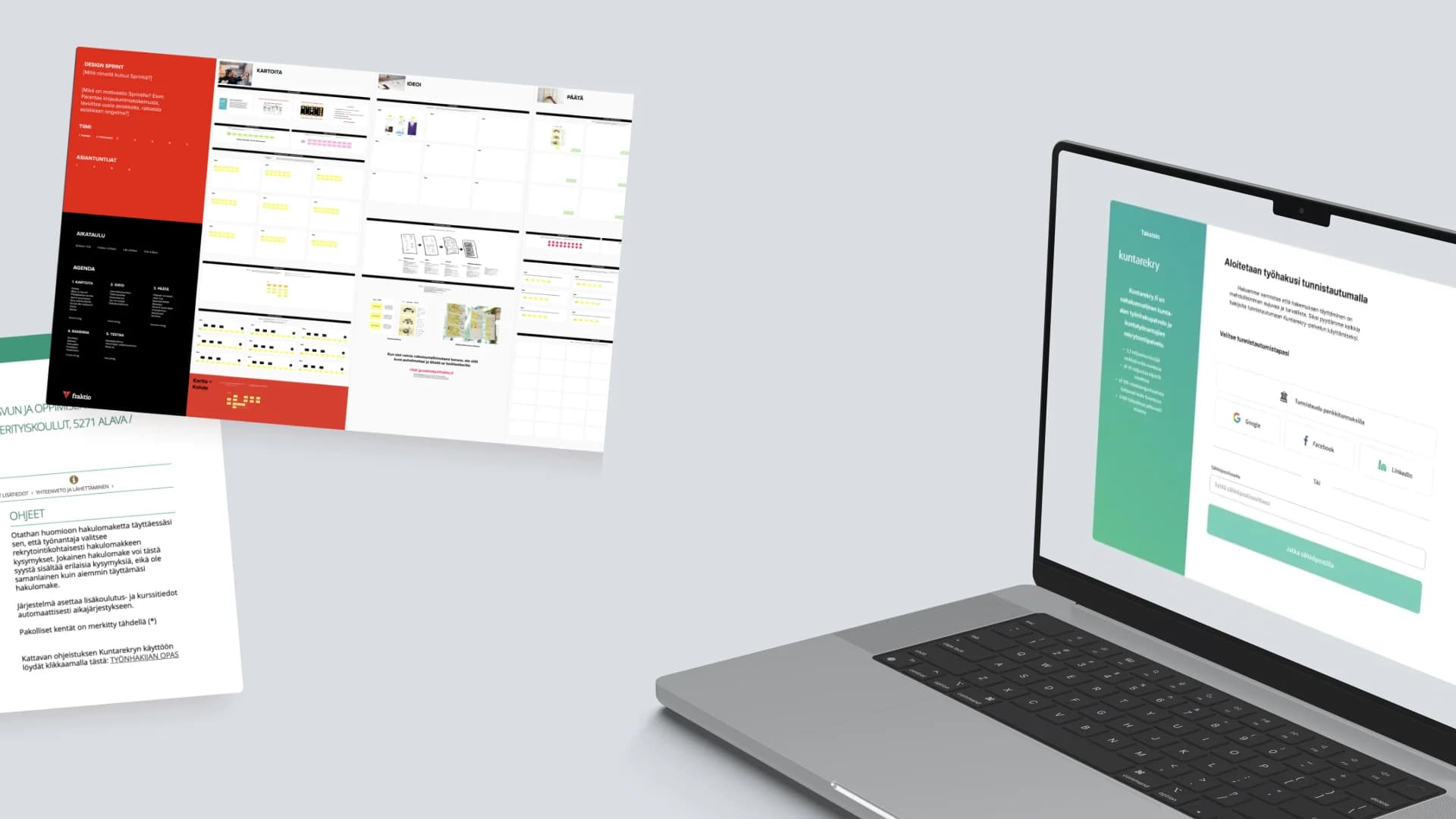
Artifacts, interfaces, and workshop material from the kind of work this page is about.

Vitali facilitates the room, frames the decision, and keeps the work close to the evidence instead of presentation theatre.
Admicom
5-day validation
From Uncertainty to Validated Prototype
FCG / Kuntarekry
500,000 applications/year
Design Sprint for 1.5 Million Users
Big Four Professional-Services Firm
5 auditors. 90 minutes. One rename.
The Week Before the Build
Trusted by teams at


What starts showing up
These are the patterns that usually appear before a team admits the direction is under-questioned.
Service-design projects start open-ended, then drift past the original timeline.
Two workshops in, the prototype direction is clear but the next steps aren't scoped or scheduled.
Validation 'in a few weeks' has been the answer for months.
The team wants certainty before building but has no defined mechanism to get it.
Outcomes you can point to
The point is not abstract insight. It is a smaller and more confident next move.
A Figma design system library (~12 components, light + dark tokens, named in your product's domain vocabulary).
A working prototype at a declared tier (Facade / Simulated-data / Spike / Production-stub), chosen on Day 0 for fit, same price across tiers.
Synthesised user research from 5+ qualified sessions: top 5 themes, verbatim quotes, recording clips.
A signed 90-day phased roadmap (3 phases, one A4 page).
A signed decision log. Every decision made and every direction discarded, with reasons.
A short decision cycle, not a research maze
This is structured to surface signal early, while the cost of changing course is still low.
Day 0
90-min prep session. Lock the Outcome Contract together (components, screens, prototype tier, sessions, roadmap shape) and confirm Recruitment SLA + tool access.
Monday (Day 1)
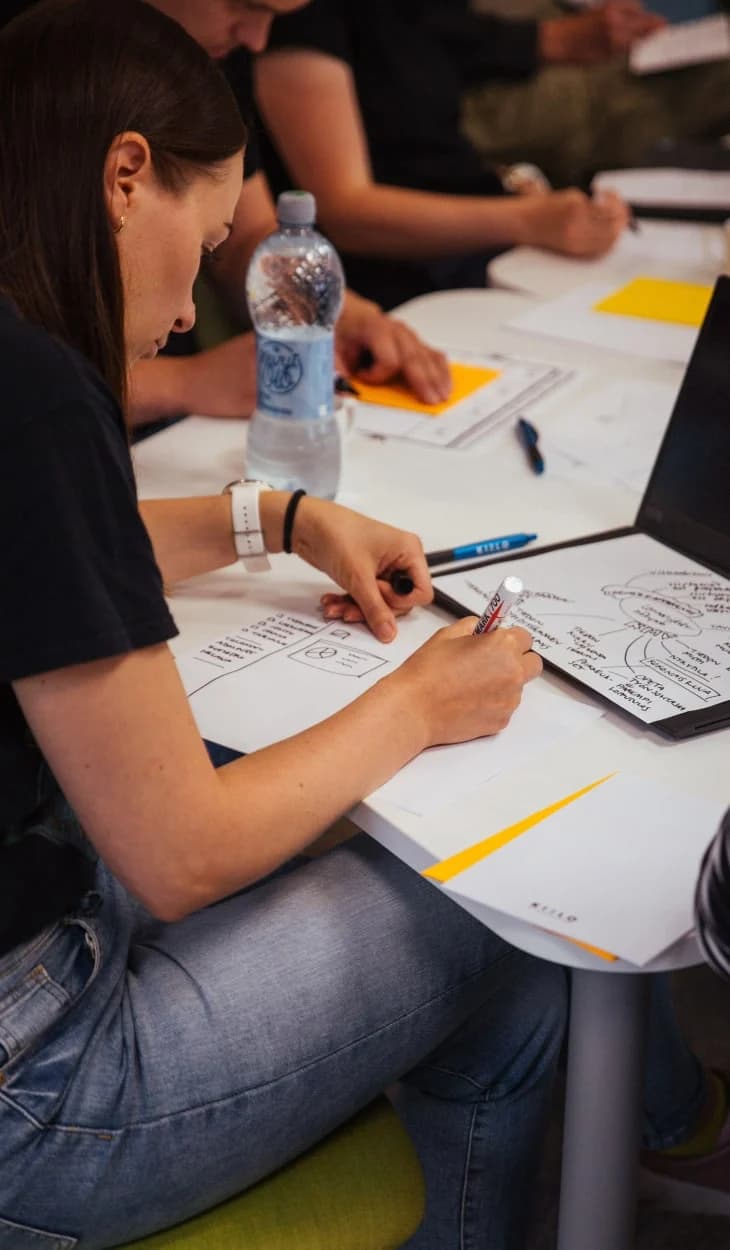
Frame the problem with a sailboat retro, vote on the direction to test, lock the prototype scope. Afternoon: live AI build. You watch Lovable, v0, Figma Make, and the prompt patterns work in the room.
Tuesday (Day 2)
Morning prototype iteration. Afternoon: five user-test sessions back to back, you watch live, we capture observations.
Wednesday (Day 3)
Research synthesis. Decision workshop on impact × effort matrix. 90-day roadmap workshop. Final prototype demo + signed decision log.
Friday or following Monday
Polished asset bundle delivered. Figma library, prototype URL, research synthesis PDF, signed roadmap PDF, signed decision log.
If this page sounds uncomfortably familiar, take the quiz before you commit more budget.
The quiz is the fastest way to tell whether this is the right format, whether another route makes more sense, or whether the team simply needs execution support.
You have a product direction roughly defined and want to validate it without a 6-week discovery.
A decision-maker can clear three days and be in the room Day 1 morning + Day 3 afternoon.
You can introduce 5 qualified users for testing (we help you screen and recruit).
The artefact you'd carry into the room
A click-through prototype of the validated path — the deliverable, not a deck about it.
Evidence from shipped work
These offers are anchored in actual projects, real stakeholder rooms, and visible change afterward.
Expectations were high, and they were met. The Design Sprint went really well. We received feedback internally that it was exceptionally well facilitated.
Design Sprint clearly defined our service direction and unified departmental goals.
Ugh, another system to learn.
Writing that helps the same problem click
These are the pieces most likely to sharpen the conversation if this page already feels familiar.
Thinking
Inside the 3-Day AI Design Sprint
How a productized Design Sprint actually runs, by the day. The guarantee structure, the four prototype tiers, and why AI compresses the production layer rather than the method.
Thinking
Embracing Rapid Design with Figma and AI
How AI tools are changing the design workflow. What works, what doesn't.
Questions that usually come up
The practical questions tend to be less about process and more about timing, scope, and how much certainty a team actually needs.
Other ways this service tends to show up
The same service often enters from different angles. These pages are the adjacent decision points.
Design & Validate
Customer Research Workshop
Bring the voice of the customer into the room before the roadmap hardens around internal assumptions.
Design & Validate
Design Sprint for B2B Teams
For teams dealing with long sales cycles, messy workflows, and too many stakeholders to rely on guesswork.
Design & Validate
Product Validation Consultant
Before you spend another quarter building, find out whether the direction makes sense to real users.