


B2B teams rarely struggle from lack of effort.
They struggle because the product sits in the middle of too many moving parts.
A buyer wants one thing. An operator wants another. Admin users care about visibility. End users care about speed. Compliance has opinions. Sales has promises in the market. Leadership wants growth. Product wants coherence. Engineering wants a scope that can actually ship.
That is exactly why design sprints work well in B2B.
They create a short window where all those pressures become visible at the same time, inside one decision-making frame, before the team drifts back into its normal silos.
Why B2B products need a different kind of validation
Consumer teams can sometimes get away with rough intuition and large traffic volumes. B2B teams usually cannot.
The workflows are more specific. The users are more varied. The switching costs are higher. The consequences of confusion are more expensive.
If you get a key workflow wrong in a B2B product, the damage is not just “lower engagement.” It becomes:
- a longer sales cycle
- poor onboarding
- internal support burden
- features that nobody trusts
- product debt built on the wrong assumptions
The good news is that B2B users are often very capable of telling you what is wrong when you show them something concrete.
Admicom is a strong example. Different internal functions had different opinions about what mattered in the dashboard. The sprint forced the team to stop theorizing and put something in front of real users. In five days, they had a tested concept, clearer priorities, and a way to resolve a debate that had already dragged on too long.
What a B2B design sprint actually solves
The sprint is not magic. It does not replace strategy, delivery, or long-term leadership. It is a focused intervention for a decision that has become too expensive to leave to internal debate.
Typical B2B sprint questions look like this:
- What should this dashboard prioritize for different roles?
- Which workflow steps actually matter to the user, and which are internal noise?
- Is the value proposition landing when people use the product, not just when sales explains it?
- Which path should the team build first when there are multiple stakeholder needs?
When the question is clear, the sprint compresses a lot of otherwise slow work:
- stakeholder alignment
- rough concepting
- prototype creation
- user testing
- synthesis
- decision-making
That compression matters because organizations tend to drift back toward politics when the cycle is too long.
What good sprint facilitation changes
Most teams do not need more brainstorming.
They need a structure that keeps the work from collapsing into either endless discussion or premature design production.
That means:
- the right question gets framed before the sprint starts
- the right people participate
- the prototype is realistic enough to trigger honest feedback
- the synthesis ends in decisions
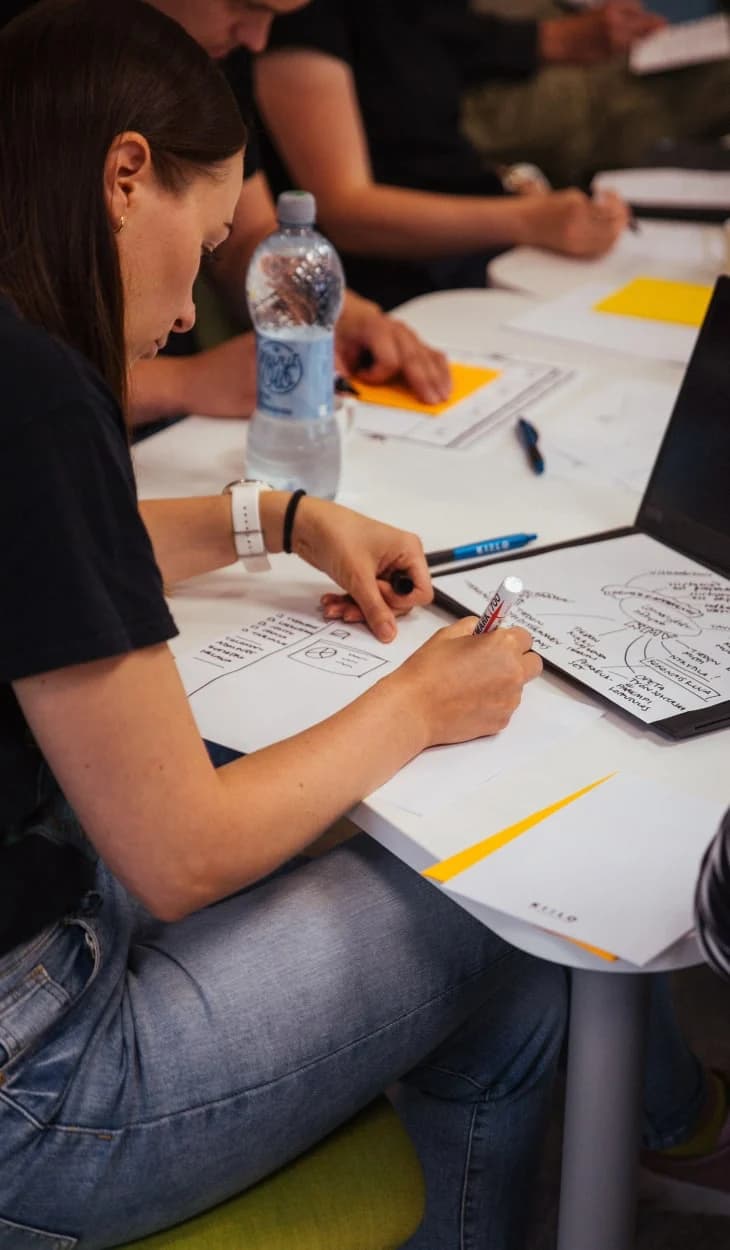
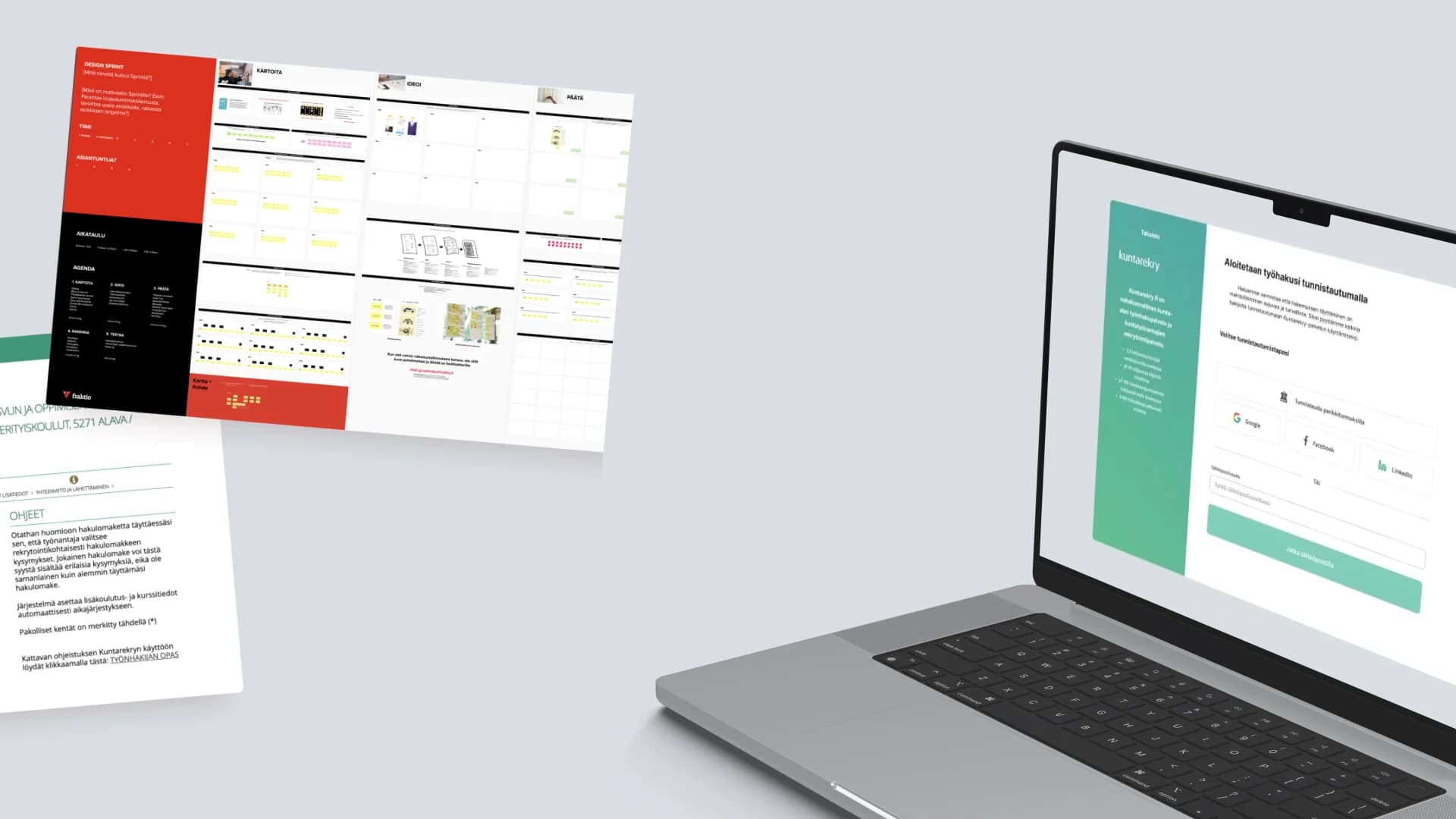
FCG / Kuntarekry shows the cross-functional value clearly. Eleven people from different functions had to align around a public-sector hiring flow that serves 1.5 million users. The sprint produced concrete improvements, but the deeper value was that it unified direction across departments. That is hard to do in ordinary weekly meetings. In a sprint, it becomes the point.
Why B2B teams benefit from outside facilitation
Inside the company, everyone already represents something:
- product scope
- customer pain
- technical feasibility
- commercial pressure
- organizational history
That makes it hard to facilitate cleanly. Someone is always protecting a prior decision, defending team effort, or carrying institutional memory that distorts the conversation.
An outside sprint facilitator brings distance.
I am not there to defend the current roadmap. I am there to make the real decision legible, testable, and honest.
That matters even more in B2B because many of the strongest assumptions sound reasonable inside the building. They only fail when a real user tries the thing.
Speed matters, but structure matters more
People often focus on the speed of a sprint. Five days. Three days. Sometimes even less.
The real value is not the calendar. It is the structure:
- map the problem
- identify the riskiest part
- decide what needs to be tested
- build a believable version
- put it in front of users
The Parliament of Finland prototype is the extreme proof of this. A crisis situation. A highly constrained problem. A prototype delivered in under 24 hours. That level of speed was only possible because the structure was disciplined. The same logic applies to B2B work. Speed comes from knowing how to cut through noise, not from moving recklessly.
What you get after the sprint
You should have something your team can use immediately:
- tested prototype direction
- workflow priorities
- evidence from real users
- sharper implementation scope
- cleaner stakeholder alignment
Often the most important outcome is not a new idea. It is a better decision about where not to spend the next quarter.
For B2B teams, that can mean avoiding months of building around the wrong admin model, the wrong dashboard abstraction, or the wrong handoff between user roles.
That is why I like this format for B2B environments. It respects the complexity without letting the complexity become an excuse for slow thinking.
If your team is stuck between “we need to move” and “we are not sure this is right,” a design sprint is one of the fastest ways to replace internal certainty with tested direction.